 By Henry James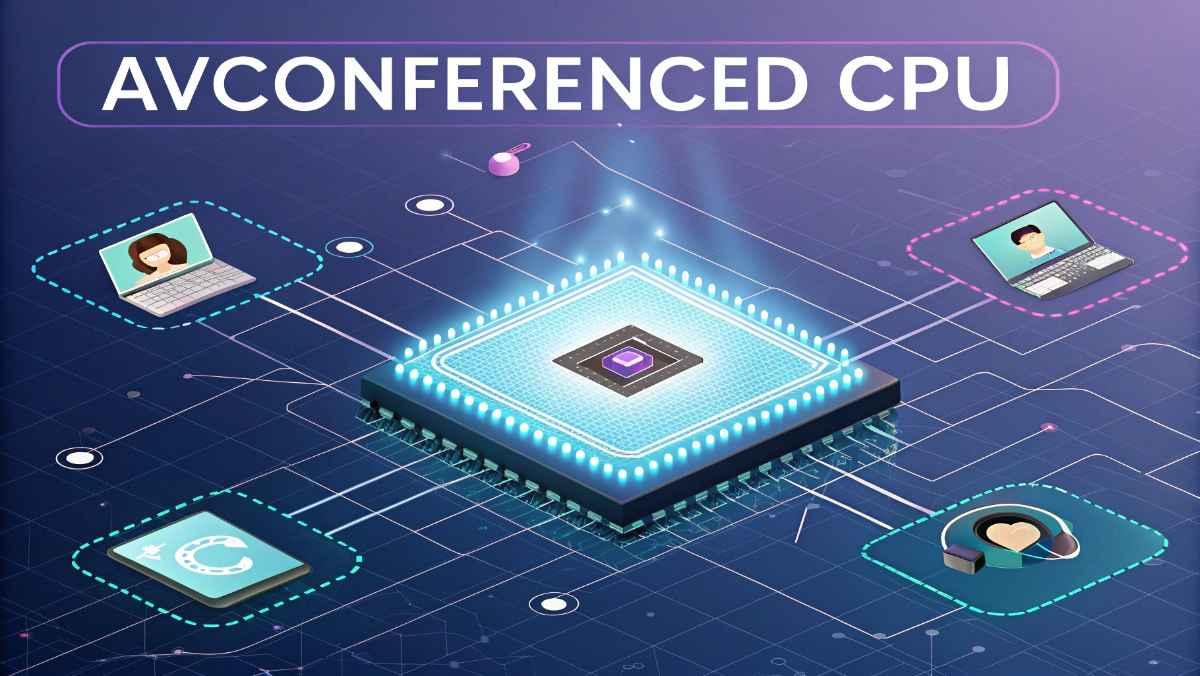
Technology is changing fast, and new terms appear every day. One term that many people are starting to see is AVConferenced CPU. At first, it may sound confusing, but it is actually easy to understand.
In simple words, an AVConferenced CPU is related to computers that are used for audio and video conferencing. These systems help people talk, meet, and work together online using sound and video. The CPU plays a very important role in making these meetings smooth and clear.
In this guide, you will learn what AVConferenced CPU means, how it works, why it matters, and how to choose the right one.
The term AVConferenced CPU can be broken into two parts:
- AV (Audio-Visual): Sound and video together
- Conferenced: Used for meetings or communication
- CPU (Central Processing Unit): The brain of a computer
So, an AVConferenced CPU is a processor that handles audio and video tasks during online meetings.
It manages things like:
- Video calls
- Audio clarity
- Screen sharing
- Streaming quality
- Real-time communication
Without a good CPU, your video calls may lag, freeze, or lose quality.
Many people think internet speed is the only important factor for video calls. That is not true. The CPU also plays a huge role.
Here’s why:
The CPU helps process the video you send and receive. High-quality video needs more power.
Clear voice needs fast processing. The CPU reduces delay and improves sound.
During meetings, you may:
- Share your screen
- Run apps
- Use chat
The CPU manages all these tasks at once.
The CPU compresses (encode) and decompresses (decode) video data. This helps in smooth streaming.
When you join a video call, many things happen at the same time:
- Your camera captures video
- Your microphone captures sound
- The CPU processes both
- Data is compressed and sent over the internet
- Incoming data is decoded and shown on your screen
All this happens in real time, and the CPU handles most of it.
If your CPU is slow, you may notice:
- Lagging video
- Audio delay
- Freezing screen
- Poor quality
Not all CPUs are the same. Some are better for conferencing tasks.
Here are important features to look for:
More cores mean better multitasking. A CPU with 4 or more cores is a good start.
Faster speed helps in quick data processing.
Some CPUs have built-in graphics, which helps with video tasks.
Modern CPUs use AI to improve:
- Noise cancellation
- Background blur
- Face tracking
Efficient CPUs use less power and stay cooler during long meetings.
Different users need different types of CPUs.
If you only attend simple meetings:
- Dual-core or quad-core CPU is enough
For regular meetings and multitasking:
- Mid-range CPUs work best
For streaming, webinars, and heavy tasks:
- High-end CPUs are needed
AVConferenced CPUs are used in many areas today.
People working from home use video calls daily.
Students and teachers use conferencing tools for classes.
Companies rely on video meetings for communication.
Doctors consult patients through video calls.
Content creators need strong CPUs for smooth streams.
If your CPU is not powerful enough, you may face many issues:
- Video lag
- Audio breaking
- System freezing
- High CPU usage
- App crashes
These problems can make meetings frustrating.
If your system is slow, you can improve it.
Too many apps use CPU power.
New updates improve performance.
Some apps use less CPU.
If possible, upgrade to a better processor.
Enable this setting in apps for better performance.
You may wonder if this is a special type of CPU.
The truth is:
- There is no separate CPU called “AVConferenced CPU”
- It simply means a CPU that performs well in AV tasks
However, modern CPUs are designed with better support for:
- Video encoding
- AI features
- Media processing
So, they are more suitable for conferencing.
If you want a smooth experience, look for:
- At least 4 cores (8 is better)
- Good clock speed (3.0 GHz or higher)
- Built-in graphics support
- Latest generation processor
- Good cooling system
The CPU is important, but the GPU also helps.
- GPU handles graphics tasks
- Helps in video rendering
- Reduces load on CPU
If your system has a GPU, your video calls will be smoother.
Technology is improving fast. In the future, CPUs will become even better for AV tasks.
- Better AI features
- Real-time translation
- Improved video quality
- Lower power usage
- Faster processing
This will make online meetings feel more natural.
If you are buying a new system, keep these tips in mind:
Do you use video calls daily or occasionally?
Higher performance usually costs more.
See how CPUs perform in real-world use.
Newer CPUs have better features.
RAM and internet speed also matter.
Let’s say two people join the same video call:
- Person A has a powerful CPU
- Person B has a weak CPU
Even with the same internet speed:
- Person A sees smooth video
- Person B sees lag and delay
This shows how important the CPU is.
It means audio and video.
Not always. It depends on your usage.
Yes, low RAM can slow down performance.
Not required, but helpful for better quality.
An AVConferenced CPU is simply a processor that handles audio and video conferencing tasks. It plays a key role in making online meetings smooth and clear.
If your CPU is strong, you will enjoy:
- Better video quality
- Clear audio
- Smooth performance
But if your CPU is weak, you may face problems like lag and freezing.
So, choosing the right CPU is important, especially if you use video conferencing often.
With the right setup, you can enjoy stress-free meetings, online classes, and video calls without any issues.