 By Henry James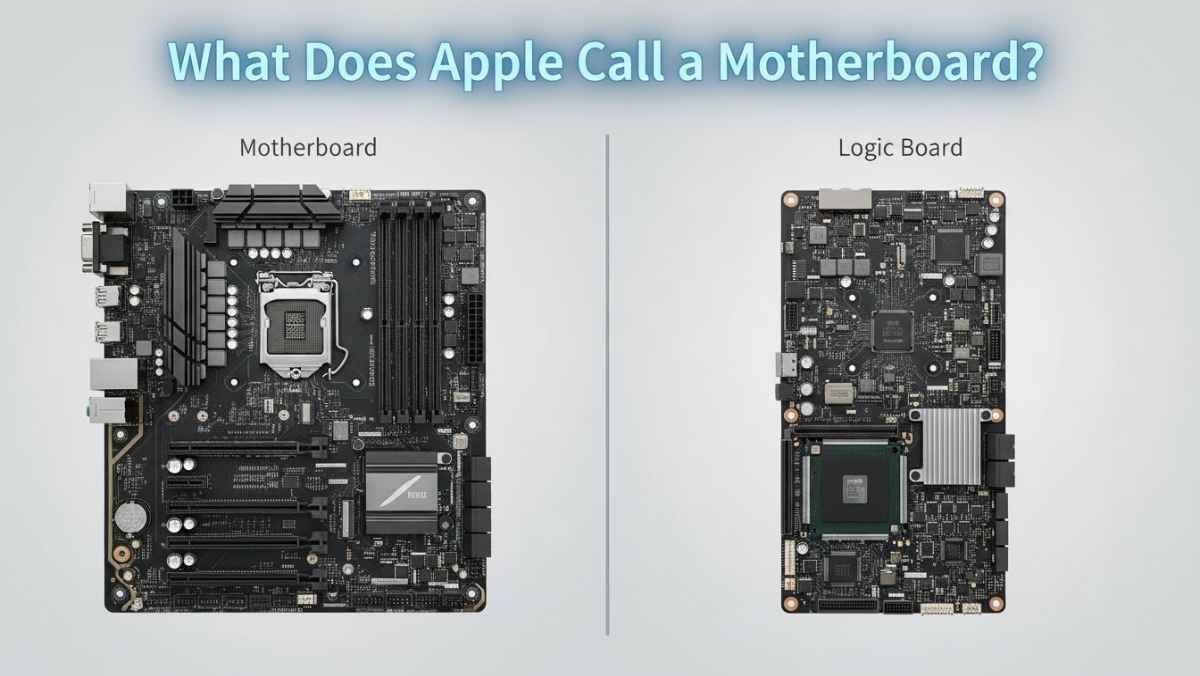
When people build or fix a computer, they often talk about the “motherboard.” It is the main board that connects everything together. But if you look at devices made by Apple, you may notice they don’t always use the same word.
So, what does Apple call a motherboard? Let’s break it down in simple words.
Apple usually calls the motherboard a logic board.
A logic board is the same thing as a motherboard, but with Apple’s naming style.
It is the main circuit board inside a device. It connects all important parts like:
- Processor (CPU)
- Memory (RAM)
- Storage
- Graphics
- Power system
Without this board, the device cannot work.
Apple likes to use its own terms. The name “logic board” comes from the idea that this board controls the “logic” of the computer — meaning how it thinks and works.
Instead of focusing on hardware structure (like the word “motherboard”), Apple focuses on function.
Here are a few reasons:
Apple keeps things clean and easy. “Logic board” sounds simple and unique.
Apple devices are not built like normal desktop PCs. Their boards are:
- Smaller
- More compact
- Custom designed
So using a different name helps show that difference.
Apple combines many parts into one board. This makes the device faster and thinner.
In simple terms, they are the same thing. The only difference is the name.
Here’s a quick comparison:
| Feature | Logic Board (Apple) | Motherboard (PC) |
| Purpose | Connects all parts | Connects all parts |
| Design | Compact, custom | Standard sizes |
| Upgrade Option | Very limited | Easy to upgrade |
| Name Used By | Apple | Most PC brands |
So, don’t get confused. A logic board is just Apple’s version of a motherboard.
Apple uses logic boards in all its main products.
Inside every MacBook, the logic board holds:
- CPU
- RAM (often built-in)
- SSD controller
Even in larger devices like iMac, Apple still uses logic boards instead of traditional motherboards.
The Mac Mini also uses a compact logic board to fit in a small case.
In mobile devices, the logic board is even smaller and more packed with components.
Apple logic boards are not like regular PC motherboards. They are built in a special way.
Apple puts many parts together on one board. For example:
- RAM is soldered
- Storage is sometimes built-in
This saves space but makes upgrades harder.
Apple designs its own chips like the M-series processors. These are built directly into the logic board.
Apple devices are known for being thin. The logic board helps make that possible.
In most cases, no.
Unlike PC motherboards, Apple logic boards are not easy to upgrade.
- Parts are soldered
- Custom design
- Limited space
If something breaks, you often need to replace the whole logic board.
Like any hardware, logic boards can fail.
Here are some common issues:
Device won’t turn on.
Heat can damage small components.
Spilled water can destroy circuits.
USB or charging ports may stop working.
When these problems happen, repair can be expensive.
If a logic board fails, you have two choices:
- Cheaper
- Fixes small issues
- Not always possible
- More expensive
- Works like new
- Often needed for major damage
Apple usually recommends replacement.
Apple builds its devices differently from normal PC makers.
Here’s why they avoid standard motherboards:
Apple designs both hardware and software. This gives better performance.
Standard motherboards are too big for slim laptops and phones.
Custom boards help improve battery life and speed.
It depends on what you need.
Pros:
- Compact
- Efficient
- High performance
Cons:
- Hard to upgrade
- Expensive to repair
Pros:
- Easy to upgrade
- Flexible
- Cheaper repairs
Cons:
- Larger size
- Less integrated
So, neither is better for everyone. It depends on your use.
If you open an Apple device (not recommended unless you know what you’re doing), you will see:
- A flat board
- Many tiny chips
- No removable RAM slots (in many models)
That is the logic board.
Since repairs are costly, it’s better to take care of your device.
Avoid overheating.
Even a small spill can cause damage.
Cheap chargers can harm the board.
Drops can damage internal parts.
So, what does Apple call a motherboard? The answer is simple: a logic board.
Even though the name is different, the purpose is the same. It is the heart of the device, connecting everything together.
Apple uses this term because of its unique design style. Their logic boards are compact, powerful, and built to fit modern devices.
But they also come with limits, especially when it comes to upgrades and repairs.
If you are using an Apple device, understanding the logic board can help you take better care of your system and avoid costly issues later.
- Apple calls the motherboard a logic board
- It performs the same job
- It is more compact and integrated
- Repairs can be expensive
- Upgrades are limited